
 Myanmar
 English


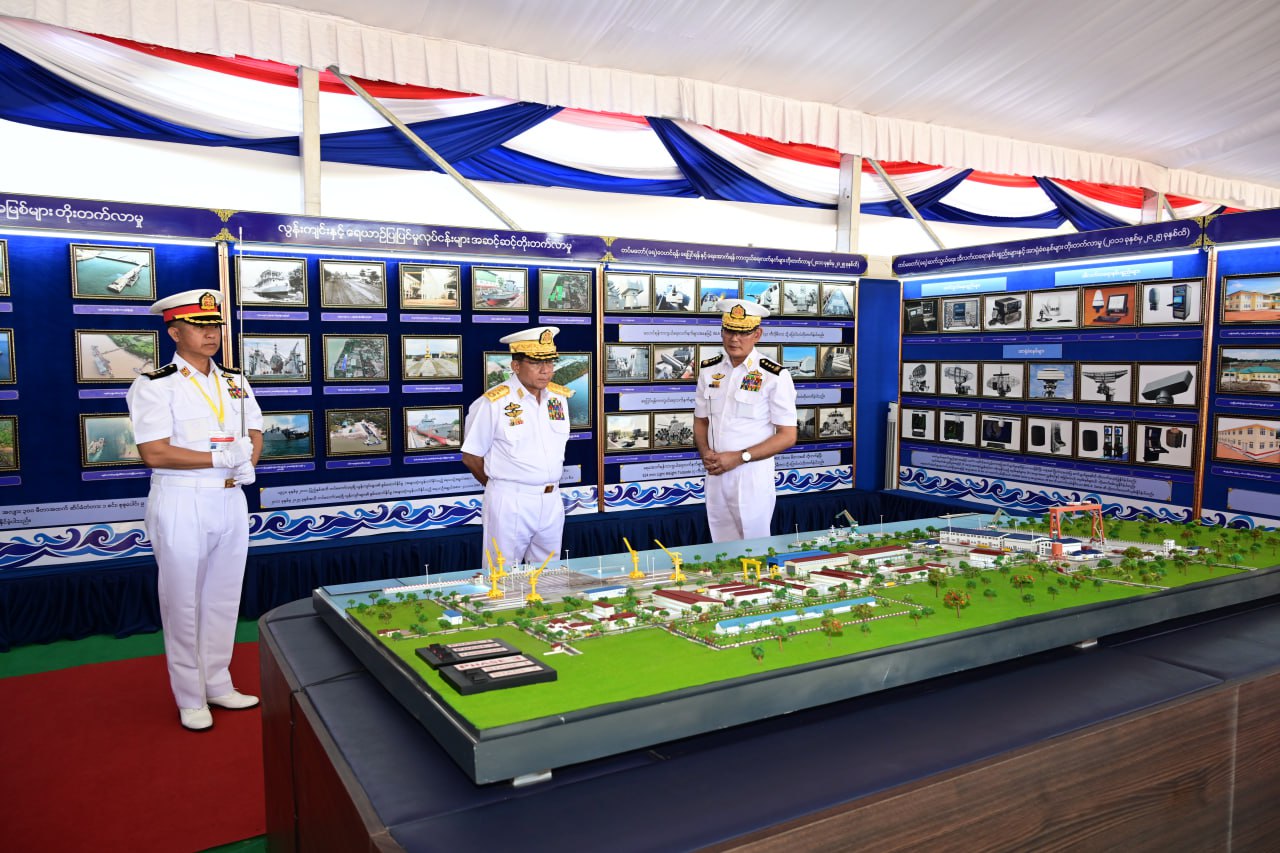
Tatmadaw (Navy) stands tall as a three-dimensional combat-ready force
Senior General Min Aung Hlaing underlined that Tatmadaw (Navy) must continuously preserve and pass on its existing fine traditions, and uphold the dignity of both Tatmadaw and itself.
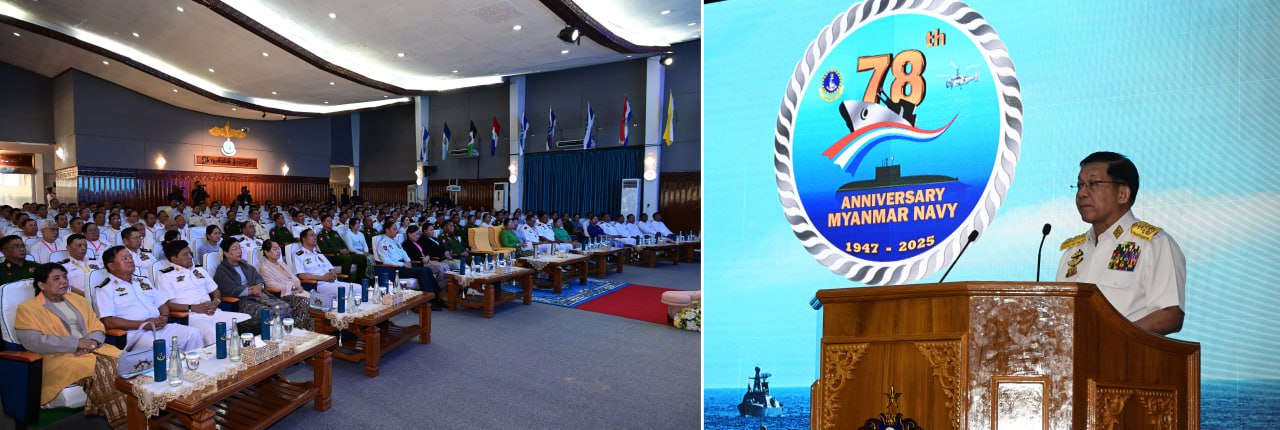
Chairman of the State Security and Peace Commission and Commander-in-Chief of Defence Services Senior General Min Aung Hlaing said so at the ceremony to mark the 78th Anniversary of Tatmadaw (Navy) of the Republic of the Union of Myanmar at Thiri Maha Zeya Kyaw Htin Hall of the Naval Training Command Headquarters in Thanlyin Station yesterday morning.
In his address, the Senior General highlighted that Tatmadaw (Navy) has become capable of independently designing, constructing, and operating frigates, and has also strengthened its capabilities with combat submarines as well as amphibious warfare vessels. As a result, Tatmadaw (Navy), which previously could conduct maritime operations only on a limited scale, has now advanced into a force capable of asserting control and operating along the exclusive economic zone and throughout the maritime boundaries.
In the 21st century, he continued that many countries are addressing maritime security challenges such as piracy, human trafficking, drug trafficking, and arms smuggling, in addition to conventional threats. To effectively deal with such threats, they need to have a modern, strong, and capable navy.
In order to enhance maritime capabilities, the Senior General recounted that Tatmadaw (Navy) has not only expanded and strengthened its forces but also established the Myanmar Coast Guard. Led by Tatmadaw (Navy), together with the Myanmar Coast Guard and maritime police force, they must collaboratively work to ensure the security of the nation’s waterways.
He added that only in this way can the nation fully safeguard and protect its territorial seas, exclusive economic zones, coastal areas, and maritime interests in accordance with international maritime laws.
The Senior General unveiled that the maritime interests of Myanmar extend not only within the territorial seas but also across the offshore waters designated as exclusive economic zones. Therefore, Tatmadaw (Navy) must be capable of protecting and defending them. In addition, to be able to match the naval forces of neighbouring countries along the maritime borders, it is essential to maintain a well-organized fleet of various types of highly capable and combat-ready warships.
He stressed that it is impossible to fully protect Myanmar’s vast maritime areas with Tatmadaw (Navy) alone. Only by coordinating with Tatmadaw (Army), Tatmadaw (Air), and the Myanmar Coast Guard can the nation more effectively secure its maritime security sector.
The Senior General revealed that naval operations are inherently multifaceted in nature. To conduct effective and successful modern naval operations, it is necessary to have a variety of warships, modern weapons and systems, and fully capable naval personnel who can operate in coordinated harmony. In addition, forces must always be trained and organized to carry out marine operations, riverine operations, and land-based combat missions.
To ensure the readiness of warships, he emphasized that vessels are being built and equipped so that they can respond to both conventional and unconventional threats.
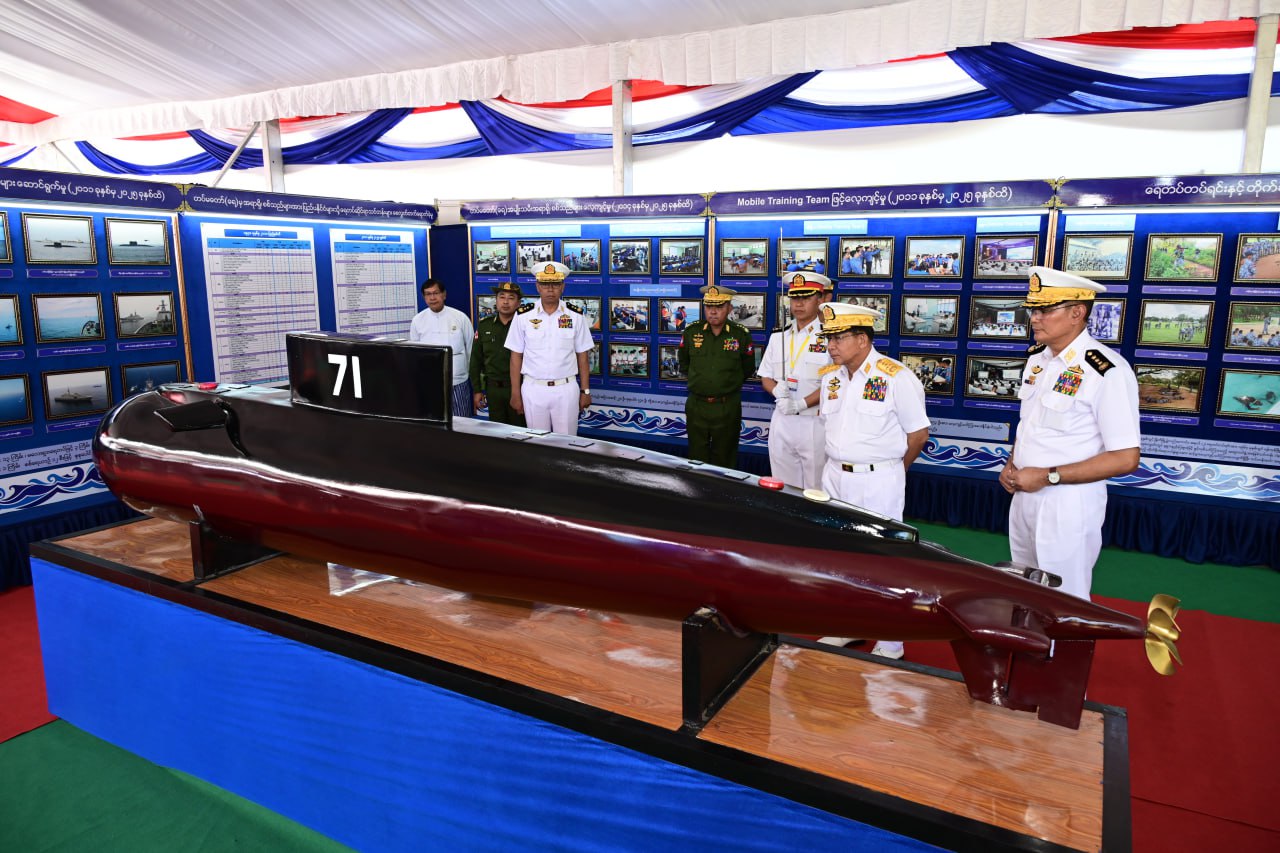
The fleet now includes a full range of ships – from frigates to fast riverine attack boats and auxiliary vessels. Today, Tatmadaw (Navy), possessing not only large warships but also submarines, can operate as a fully three-dimensional combat-ready force.
The Senior General underscored that since large frigates can now be domestically built and deployed, Tatmadaw (Navy) is capable of engaging in all four operational domains: surface warfare, space operations, undersea warfare, and electronic warfare. In the future, this will also enable Tatmadaw (Navy) to more effectively carry out its four main sectors: military, diplomatic, rule of law and humanitarian sectors.
In the diplomatic sector, he explained that Tatmadaw (Navy) has continuously conducted joint exercises and training not only with neighbouring countries’ navies and ASEAN navies but also with international naval forces, demonstrating the Tatmadaw’s capabilities. Participation in meetings with ASEAN naval chiefs, discussions with neighbouring and ASEAN navies, and joint exercises with ASEAN and multiple international navies has enabled Tatmadaw (Navy) to successfully and effectively carry out its diplomatic missions.
To make Tatmadaw (Navy) fully combat-ready, he pointed out that continuous efforts must be made to ensure readiness in three areas: warship readiness, weapons and weapon systems readiness, and individual readiness. Each Tatmadaw member must constantly study and train to maintain individual proficiency, and they must be thoroughly trained to become skilled in handling weapons and weapon systems.
In the law enforcement sector, the Senior General underlined that Tatmadaw (Navy) is responsible for preventing and controlling non-traditional threats encountered at sea, such as illegal fishing, human and arms trafficking, illegal logging, unauthorized migration, drug trafficking, piracy, and armed terrorism. Only by effectively stopping illegal activities and unlawful transport within Myanmar’s maritime areas can it contribute meaningfully to maritime security.
In the humanitarian assistance sector, he stated that a policy has been adopted to “act immediately without waiting for any higher orders”. This includes helping those in distress at sea, repatriating fellow citizens facing various hardships abroad, carrying out search and rescue operations at sea, providing public health services, and assisting in areas affected by natural disasters or global pandemics. It should be understood that the efforts of Tatmadaw (Army, Navy, and Air) in these areas also play a role in protecting the lives and property of the people.
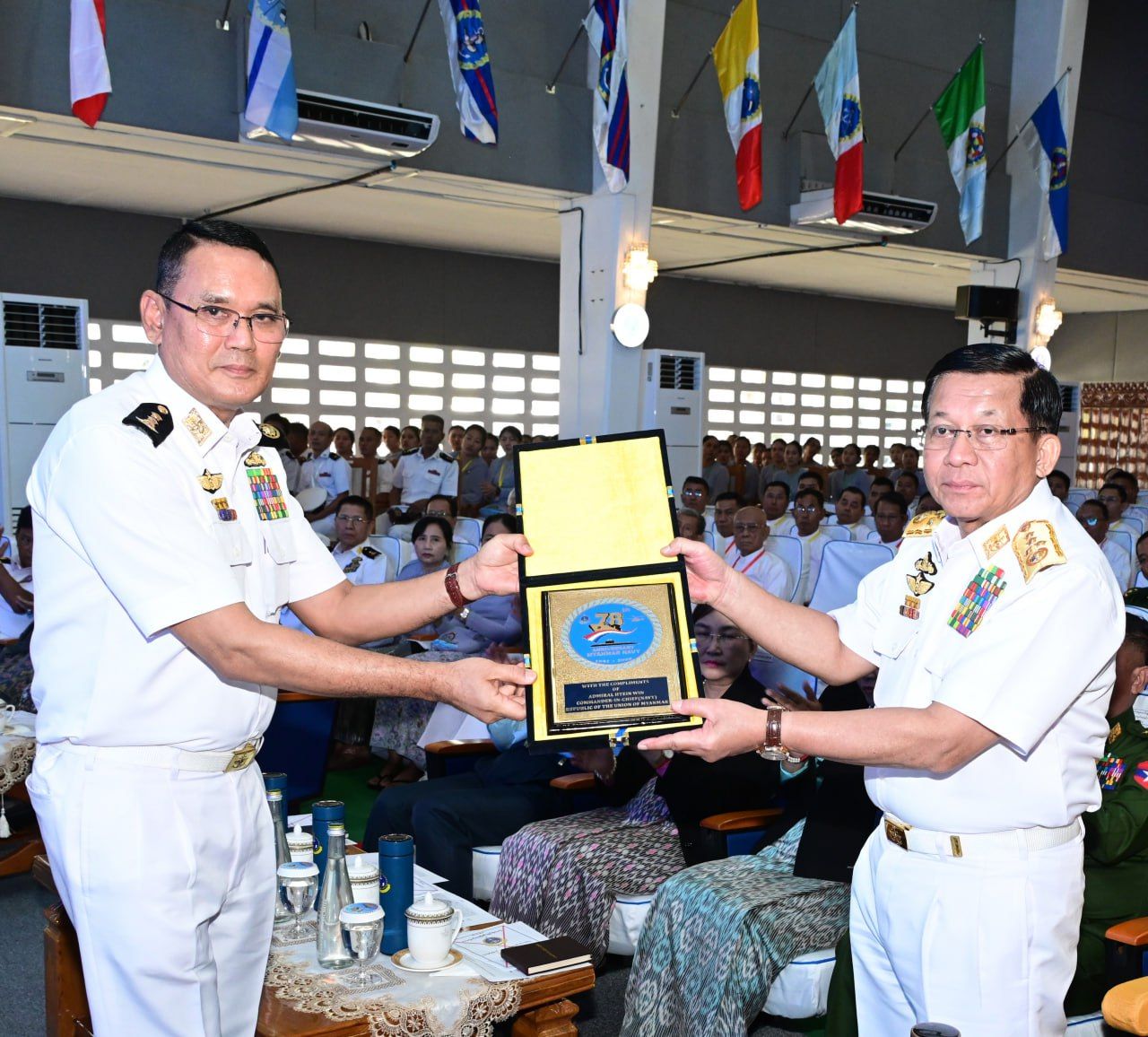
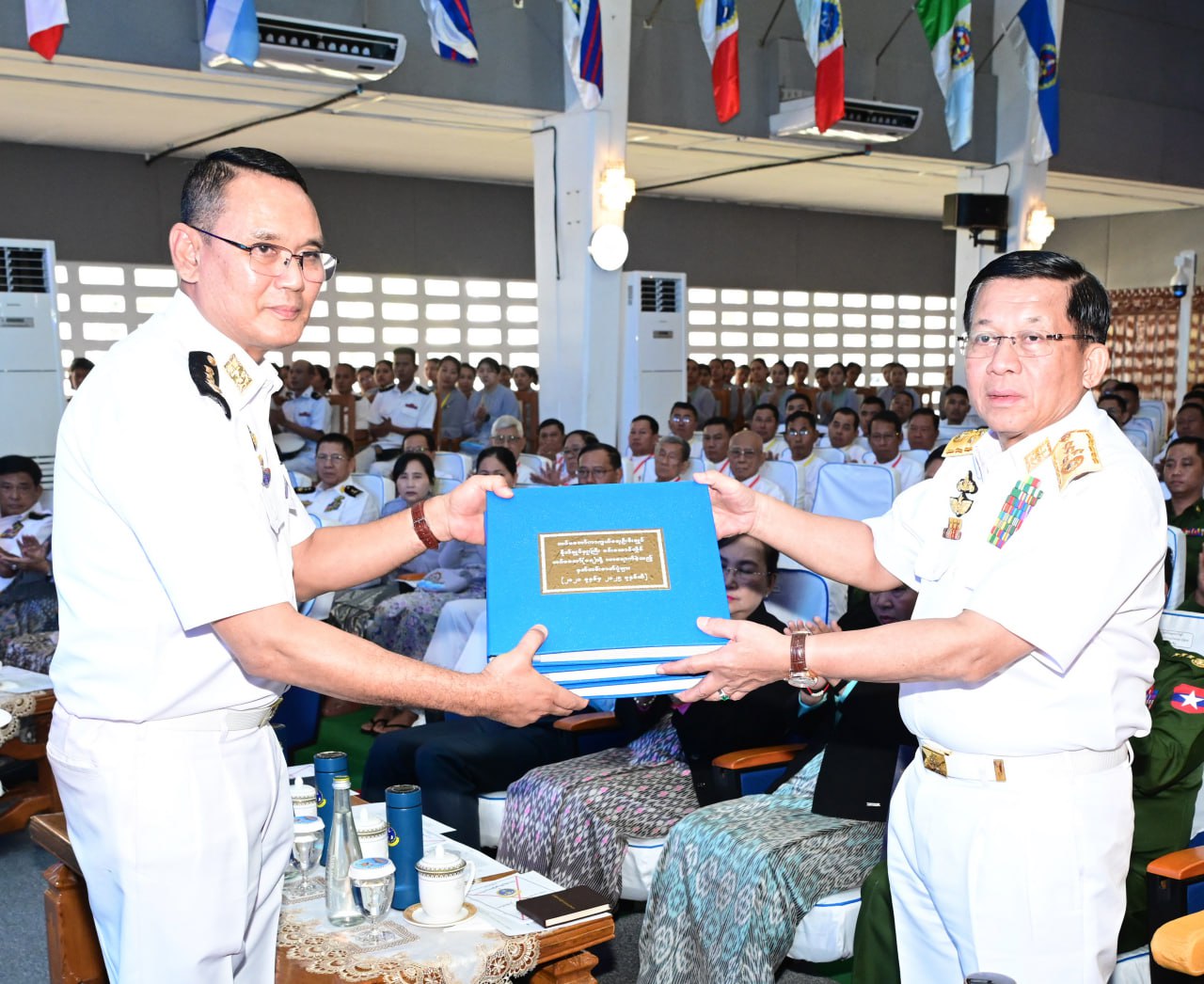
The Senior General and party watched the screening of the documentary to mark the 78th Anniversary of Tatmadaw (Navy). The Commander-in-Chief (Navy) presented an emblem to mark the 78th Anniversary of Tatmadaw (Navy), the book on the history of Tatmadaw (Navy), and a photo album to the Senior General.
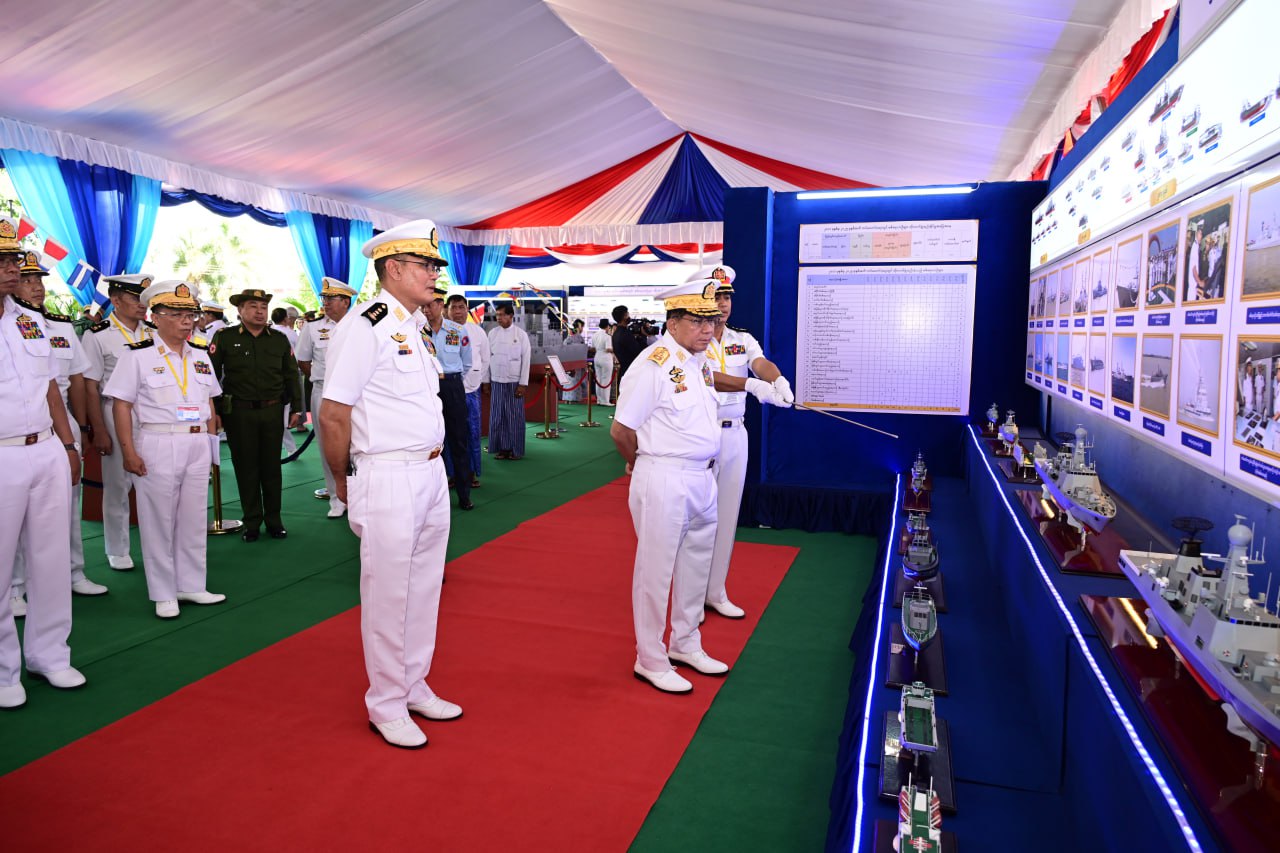
The Senior General visited the booths of the Tatmadaw (Navy) exhibition.
Also, present at the ceremony were Daw Kyu Kyu Hla, wife of the Senior General; Secretary of the Commission General Ye Win Oo and his wife, retired commanders-in-chief (Navy) and their wives, Commander-in-Chief (Navy) Admiral Htein Win and his wife, Commander-in-Chief (Air) General Tun Aung and his wife, Union-level dignitaries and their wives, senior Tatmadaw officers from the Office of the Commander-in-Chief and their wives, the commander of Yangon Command, commander of naval commands, commander of naval bases and guests.
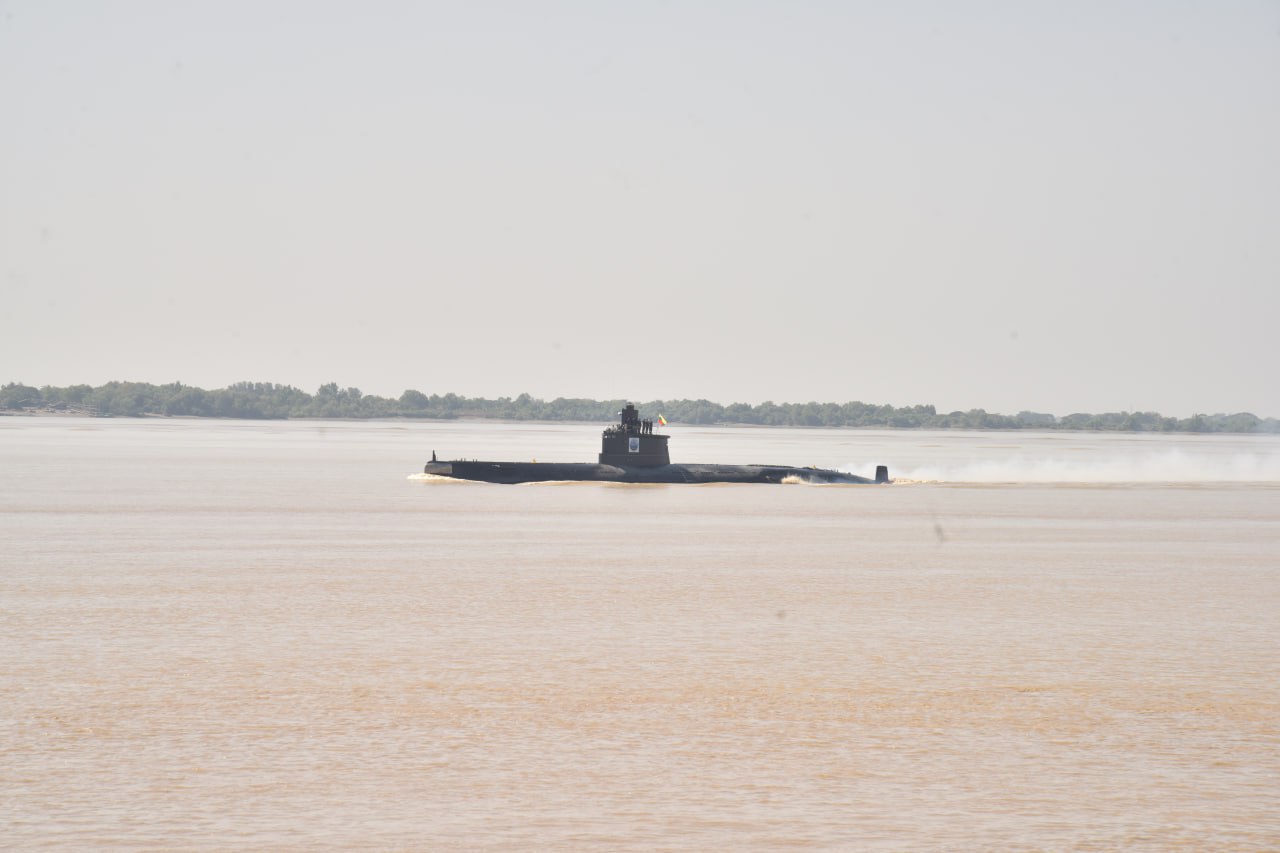
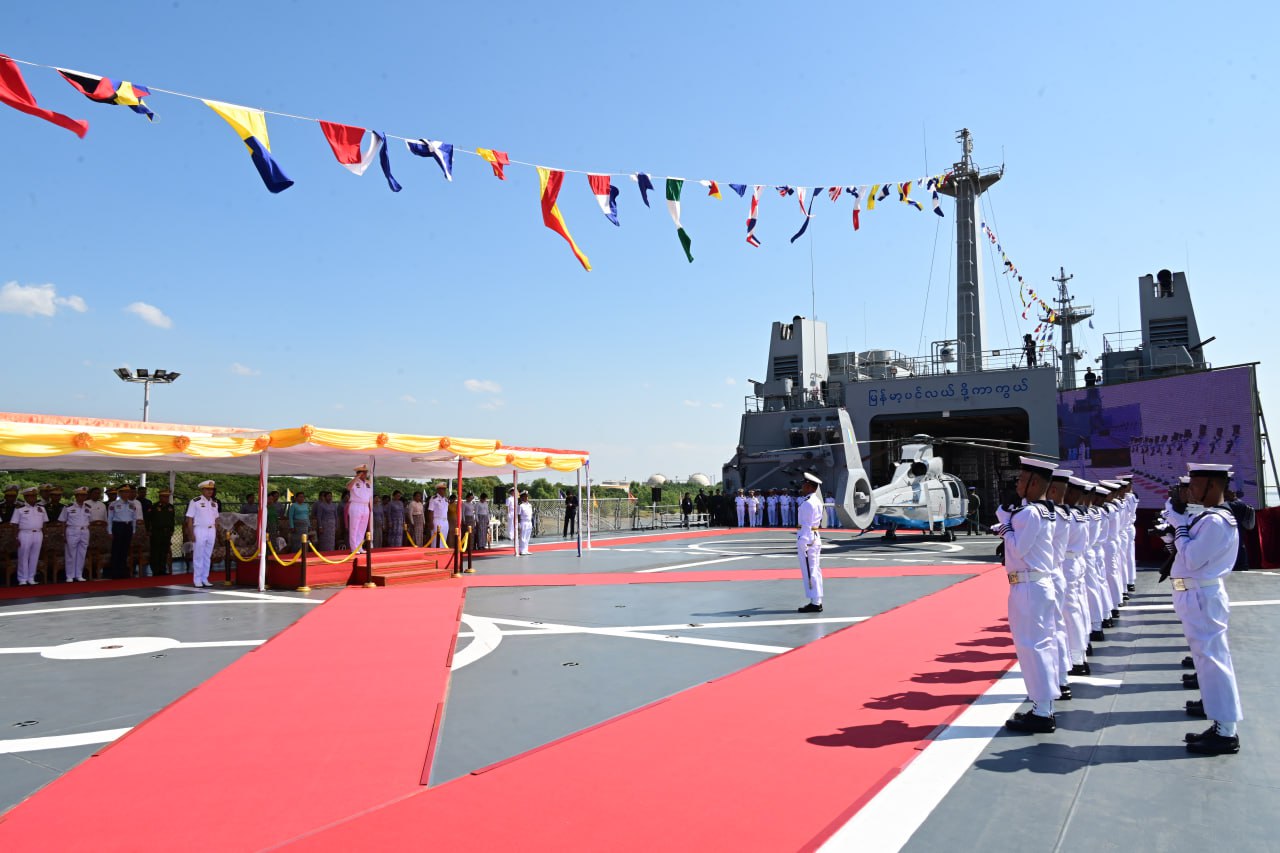
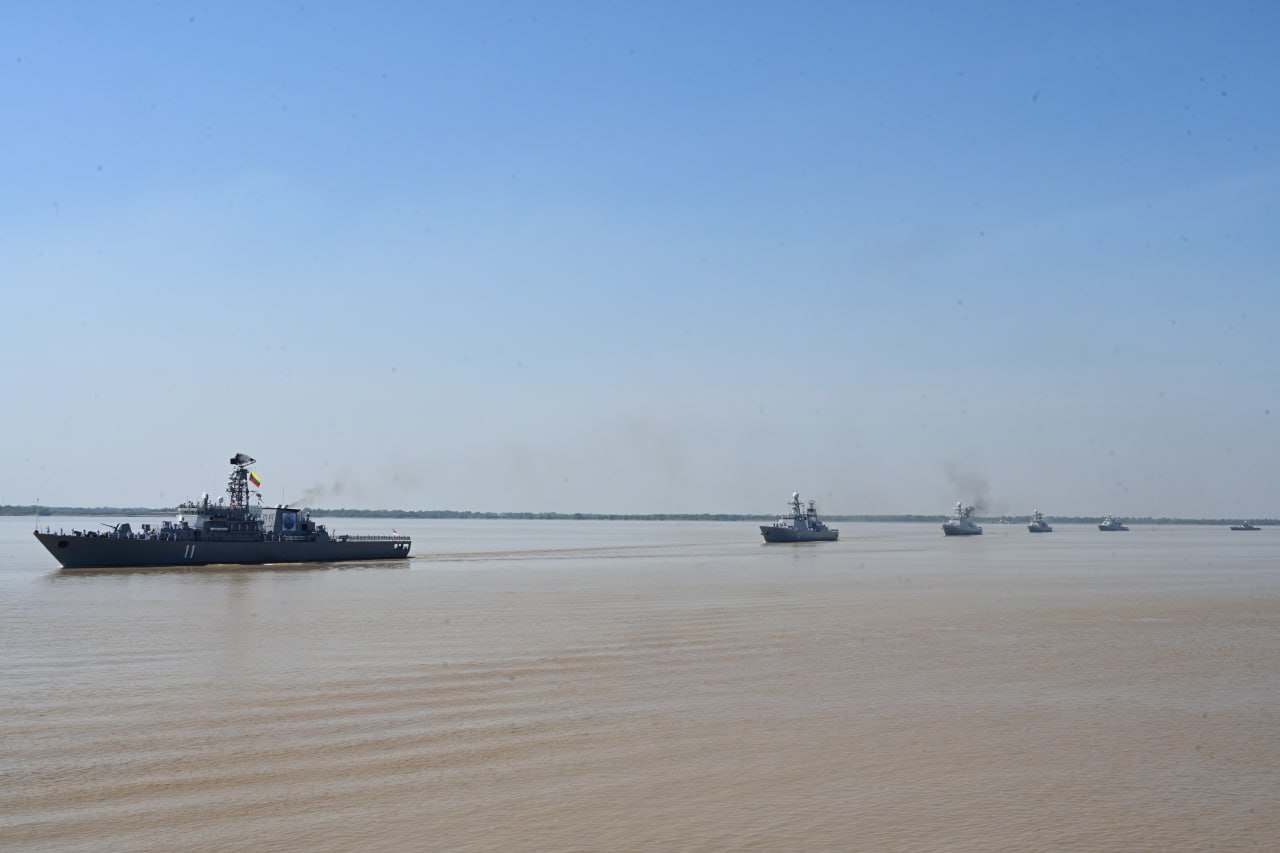
The Senior General from the dais aboard the naval vessel Mottama took the salute of the Guard of Honour and inspected it. Meanwhile, naval vessels Yan Taing Aung and Yan Gyi Aung fired 21-gun salutes to the Senior General. Afterwards, naval vessels led by submarine Minye Kyaw Htin drove in the Single Line Formation and the Line Abreast Formation to salute the SSPC Chairman and Commander-in-Chief of Defence Services.
The Senior General presented commemorative medals and gifts to officials.
On the occasion, the Senior General said that as long as the world exists, the Republic of the Union of Myanmar will exist; as long as the Union of Myanmar exists, Tatmadaw will exist; and as long as Tatmadaw exists, Tatmadaw (Navy) must also exist. Hence, Tatmadaw (Navy) must continuously preserve and pass on its existing fine traditions, and uphold the dignity of both Tatmadaw and itself.
The Senior General and party left the No 3 Naval Jetty for the Ayeyawady Naval Region Command Headquarters by naval vessel Yadanabon.
Tatmadaw members aboard naval vessels in the rivers saluted the Senior General along his route.
- Log in to post comments