
 Myanmar
 English
Space for Youth in Emerging Political Landscape
Senior General Min Aung Hlaing underscored that for national development to take place, armed conflicts must be halted, and political problems must be resolved through political means.
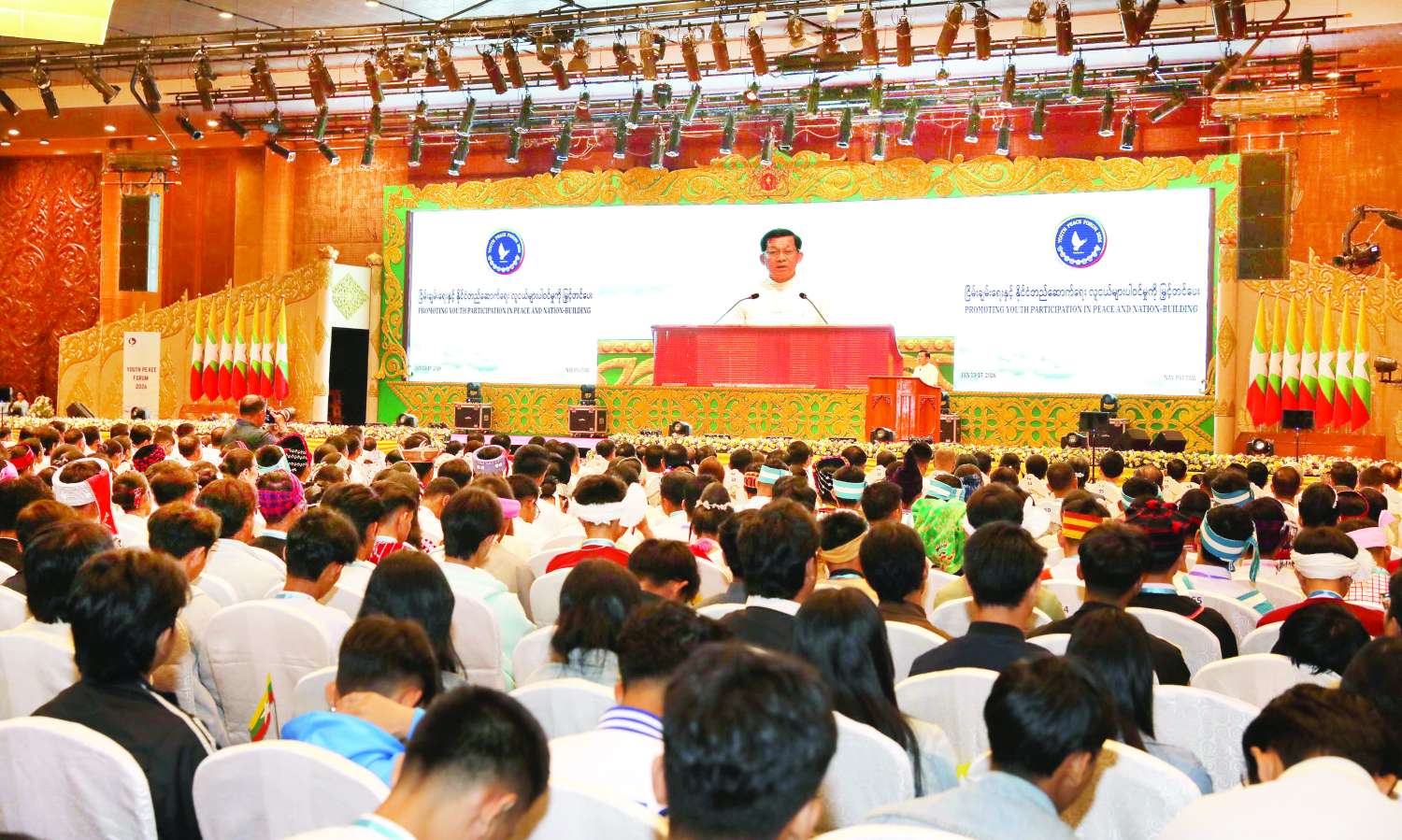
The Youth Peace Forum 2026 commenced at the Myanmar International Convention Centre I (MICC I) in Nay Pyi Taw yesterday morning, with an address by Acting President of the Republic of the Union of Myanmar and State Security and Peace Commission Chairman Senior General Min Aung Hlaing, who also chairs the National Solidarity and Peacemaking Central Committee.
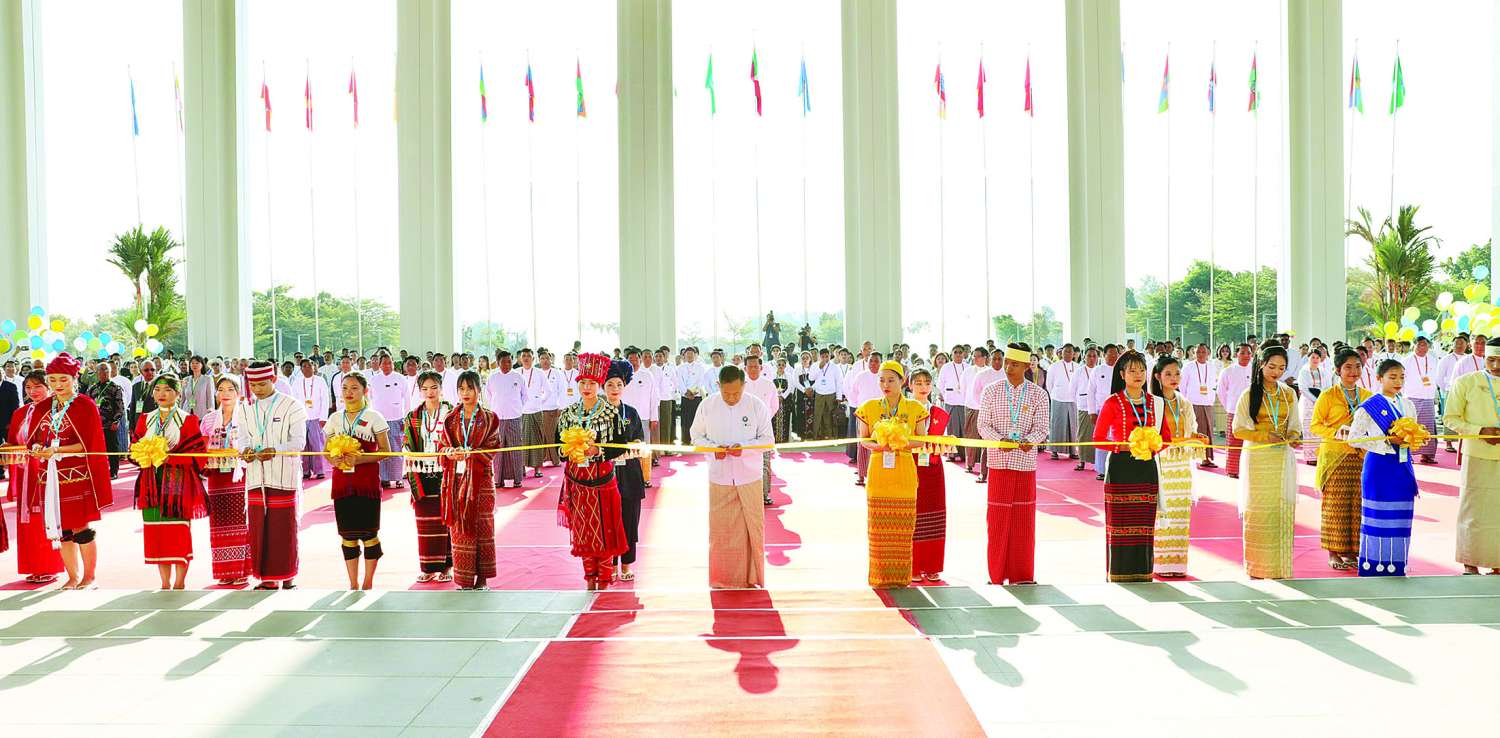
The Senior General and party were warmly welcomed by ethnic youths.
Vice-Chairman of the Commission Vice-Senior General Soe Win and eight ethnic youths cut the ribbon to open the forum.
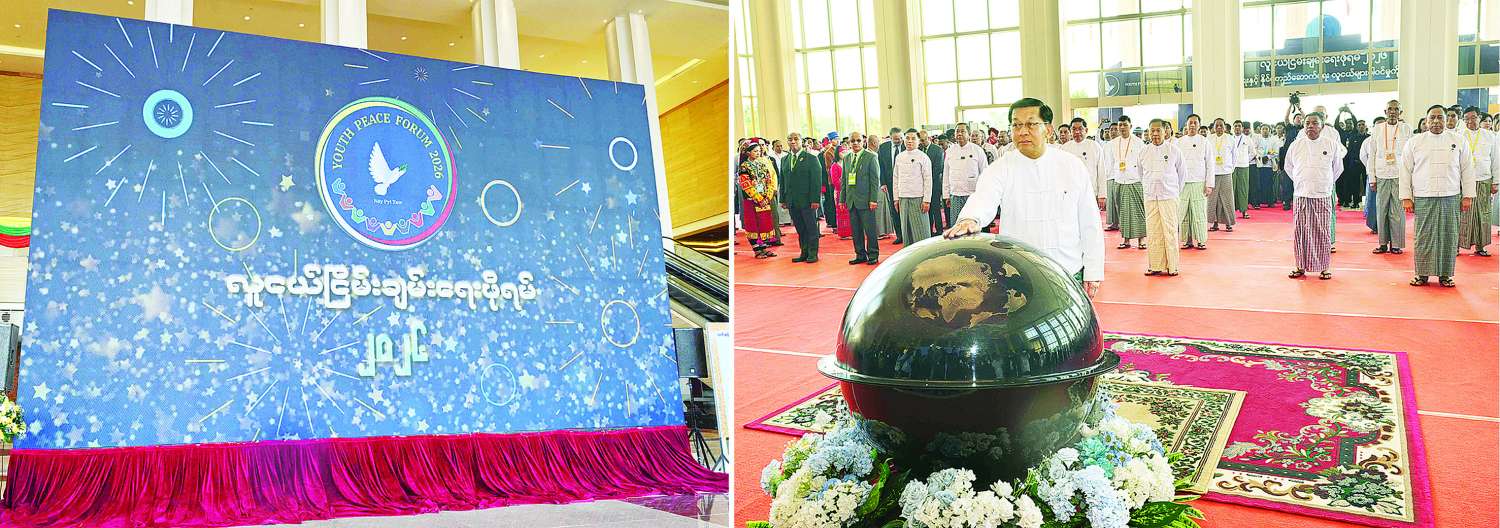
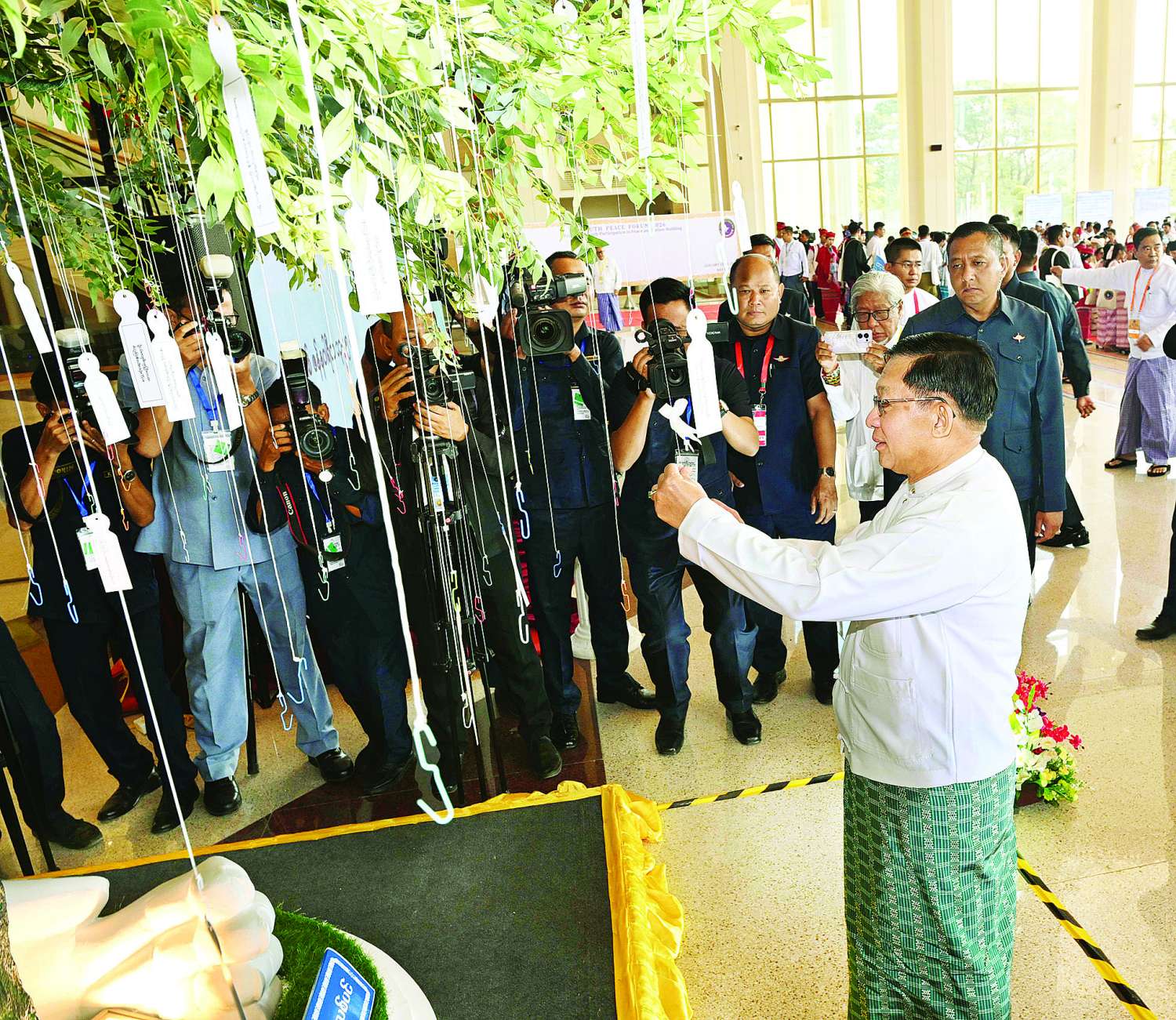
The Senior General inaugurated the Youth Peace Forum 2026 and attached a prayer letter for peace to the peace tree.
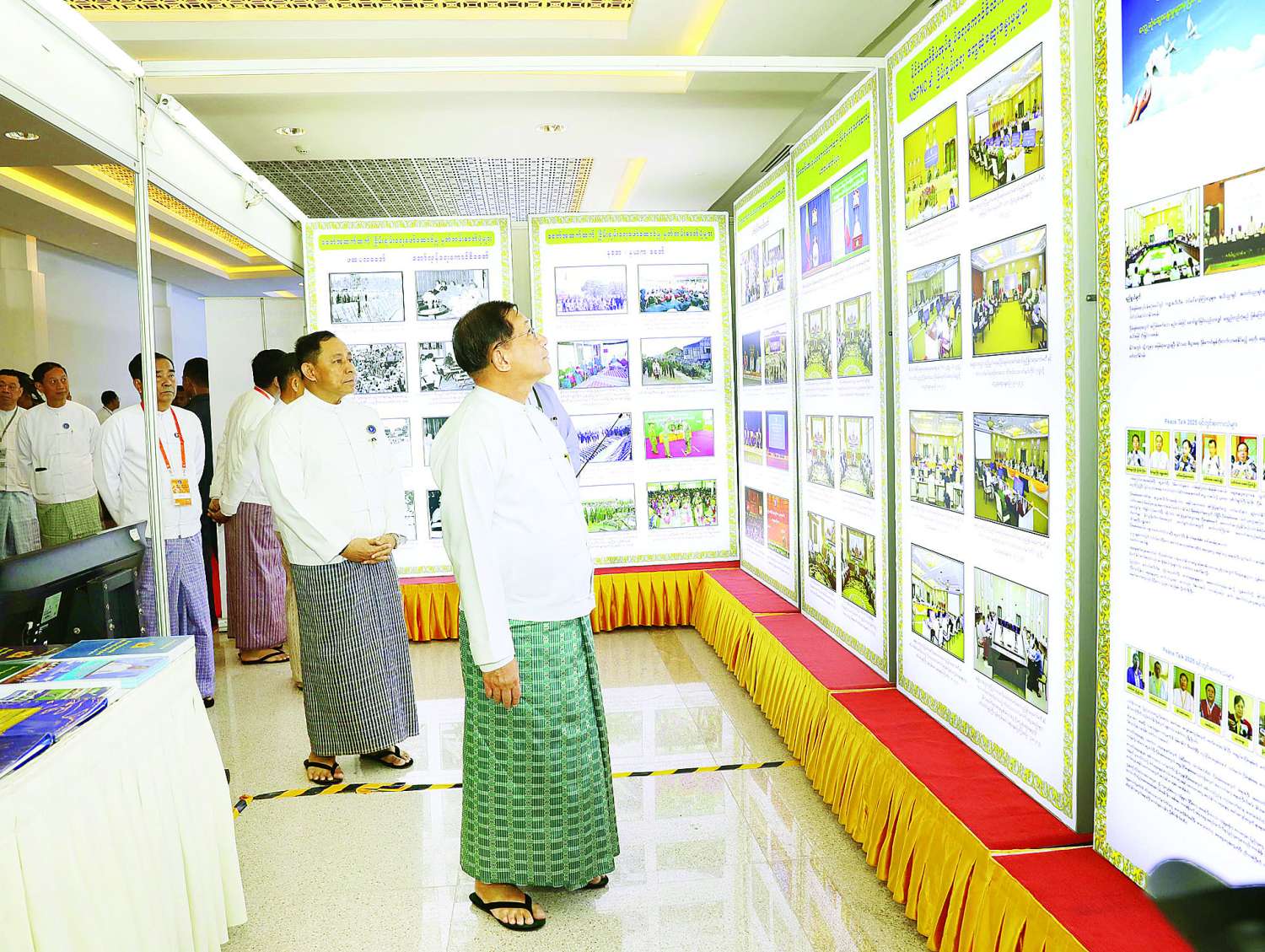
The Senior General and the party visited the booths of the exhibition to mark the forum.
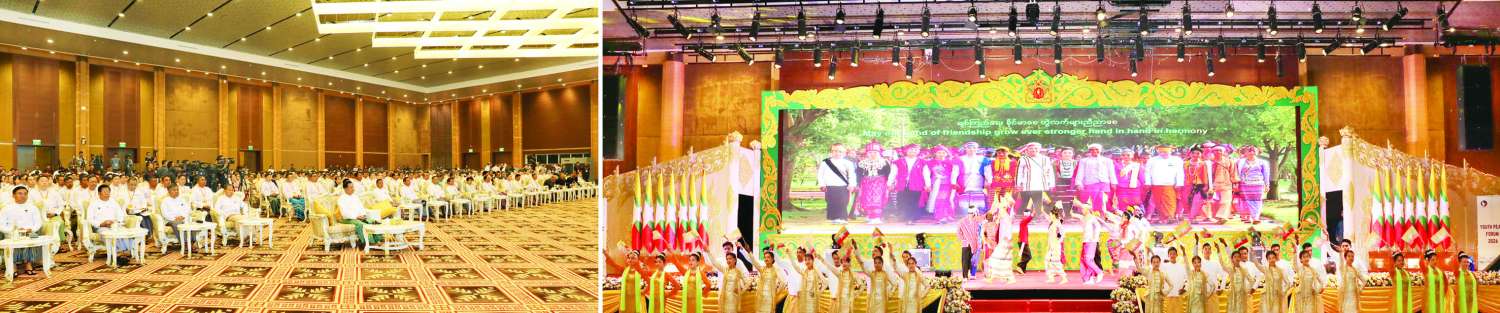
At the opening ceremony, all attendees saluted the State flag. Next, a video clip on encouraging youths to join the peace and nation-building endeavours was screened.
On the occasion, the Senior General delivered a speech. He said: If there is a shared commitment to building a Union based on democracy and a federal system, the State has always welcomed and invited armed groups, including the PDF, to return to the legal fold, prioritizing the interests of the Union. We also wish to reiterate that such offers and invitations continue to be extended.
The Nationwide Ceasefire Agreement (NCA) is what enabled the emergence of a method for resolving internal conflicts through political means rather than military action. However, due to some groups turning a blind eye to the truth, showing insufficient political will to address the root causes of the conflict, and prioritizing only their own organizations and interests, the NCA process did not advance as far as it should have. Therefore, it is also important that the NCA agreements already reached are not merely left at the agreement stage, but are practically applied and implemented.
Peace can only be achieved through meetings, dialogue, and the search for solutions. Therefore, in carrying out peace efforts, rather than merely stating what one wishes to happen, it is necessary to focus on what should happen and work together in a coordinated and united manner on what is feasible.
Differences should be set aside temporarily while dialogue continues, and areas of agreement should be jointly implemented. We wish to emphasize that only by building a practical, successful, and durable peace can the country’s development and the well-being of the people be properly advanced.
It is widely recognized that, as a consequence of armed conflicts, weaknesses have emerged in the education, health, and economic sectors.
Therefore, we must continue to make sustained efforts to achieve enduring peace throughout the entire country.
For national development to take place, armed conflicts must be halted, and political problems must be resolved through political means. However, under the current circumstances, armed conflicts continue to escalate, and as a result, peace processes are unable to move forward and face numerous obstacles. Therefore, for the peace process to advance, we must implement a peace process that actively involves the participation of the people.
To ensure peace and development, efforts are being made to ensure that the new generation of youth can enjoy full opportunities and that a system is established in which they can develop freely and securely, with comprehensive initiatives in place to promote all-around youth development.
It is necessary to nurture the new generation of students and young people, who will lead and shape the future of the nation, to develop love for the country and their ethnic heritage, and to become individuals with strong beliefs and good principles. Since the youth will create the future of the State, producing disciplined young people who are well-educated and skilled is, in effect, building the nation’s future.
In the peace sector, which is currently one of the most essential areas for the State, it is the responsibility of young people themselves to actively participate and cooperate, so that they can leave a legacy of peace for future generations.
Youth aged between 15 and 35 make up approximately one-third of the country’s population, accounting for about 33 per cent. Therefore, the correct thinking, feelings, beliefs, and attitudes of young people are essential for the nation, and they constitute a key force in achieving durable and sustainable peace.
In his speech, the Senior General continued that youth are defined as individuals aged between 15 and 35.
Those aged 15 to 25 are generally still pursuing their education, while those aged 25 to 35 are mostly working, standing on their own with the knowledge and skills they have acquired. In the future, the role of young people must be strengthened, and they should be able to actively participate in peace processes.
Without formal education, individuals lack skills, and the development of human resources is limited. Deficiency in knowledge also results in fewer good and capable people, which can harm national unity. Therefore, the Union of Myanmar must have an increasing number of educated youth. Accordingly, young people should make it a habit to read and study books continuously to expand their knowledge.
Since Myanmar is organized as a Union, there are also demands for federal rights. However, due to differences across regions, these federal rights are not uniform, and the demands for federal rights are also inconsistent. This situation has been observed to result from a lack of educated individuals.
Therefore, it is necessary to prioritize and actively support the education of ethnic communities to ensure their access to quality learning.
Concerted efforts through active movement of youth and the experience of the elders must contribute to peace and the development of the nation.
Similarly, those in positions of responsibility should support and uplift the youth. Even during the current elections, young people are participating as Hluttaw representatives. The time has come to provide space for youth in the upcoming political landscape.
If education is promoted in underdeveloped regions and the energy of young people, the experience of elders, and the support provided by the State are combined in implementing initiatives, regional development can be achieved, and this will also contribute to fostering peace within those regions.
National Solidarity and Peacemaking Negotiation Committee Chairman and Union Minister for Border Affairs and for Ethnic Affairs Lt-Gen Yar Pyae presented the gifts to mark the forum to the Senior General.
On behalf of the youths, Maung Htet Myat Thu from the Nay Pyi Taw Council Area and Ma Shoon Myat Moe Kyaw from Mandalay Region spoke words of commemoration.
Artistes from the Fine Arts Department and MRTV, and external artistes performed dance and song entertainment.
The Senior General presented the flower basket and K50 million as cash awards to the artistes.
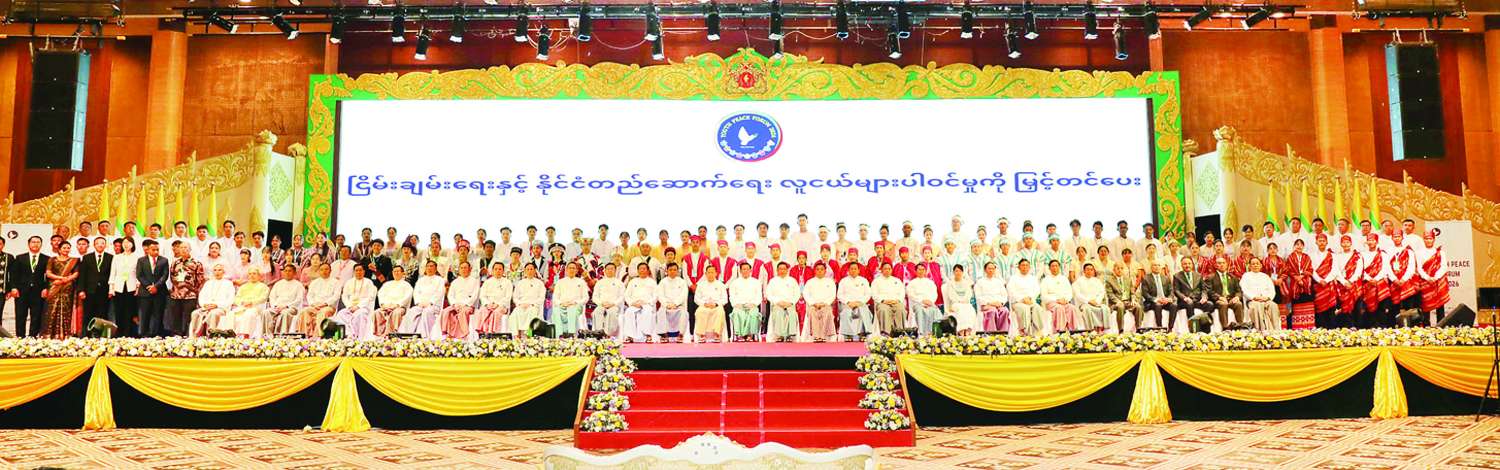
Also, present at the ceremony were Commission member Prime Minister U Nyo Saw, Secretary of the Commission General Ye Win Oo, Union-level dignitaries, Union ministers, members of the NSPNC, the Nay Pyi Taw Council Chairman, senior Tatmadaw officers from the Office of the Commander-in-Chief, deputy ministers, social affairs ministers from regions and states, participants in the peacemaking process, intellectuals and intelligentsia, diplomats, departmental officials, youth delegates, university students and observers.
The forum will be held from 13 to 15 January with the following objectives: to highlight the importance of actions taken by youth in peacemaking and social stability; to provide a constructive environment where all citizens can engage in dialogue and find solutions on relevant issues and attitudes while creating opportunities for young people; to support reciprocal communication and cooperation in peaceful communities; to identify the practical roles of youth in the post-election period; to strengthen youth capabilities in dialogue, participation, and responsible action; and to encourage proposals from youth that can support long-term sustainable peace, national reconciliation, and future social development planning. The proposals emerging from the forum will be collected and compiled into a declaration on youth and peace to contribute to the future nation-building process.
- Log in to post comments